Key Points of NIS2
Expanded Scope
- NIS2 covers a wider range of sectors, from energy, transport, and banking to health and digital infrastructure, and applies to more types of businesses, including medium-sized and large organizations in these sectors.
Stricter Security Requirements
- Organizations falling under the scope of NIS2 must implement stronger cybersecurity measures. This includes more robust incident reporting, risk management practices, and cooperation with national cybersecurity agencies. Companies must ensure they have appropriate safeguards in place to protect their networks and information systems from cyber threats.
Incident Reporting:
- There are new, tighter timelines for reporting cybersecurity incidents. Organizations must report significant incidents within 24 hours to relevant authorities and follow up with detailed reports.
Penalties
- The directive introduces more severe penalties for non-compliance, including fines, which can be substantial depending on the severity of the breach.
Supply Chain Security:
- NIS2 is placing more emphasis on the security of supply chains, recognizing that third-party vendors and service providers can be weak links in cybersecurity.
NIS2 and Password Managers
Password managers, as a critical tool for cybersecurity, are directly relevant to the objectives of the NIS2 Directive. Here’s how:
Enhancing Security:
Password managers significantly enhance the security posture of organizations by addressing one of the most common vulnerabilities in cybersecurity: weak or reused passwords. A large percentage of security breaches occur due to poor password practices, such as using simple, easily guessable passwords or reusing the same password across multiple accounts.
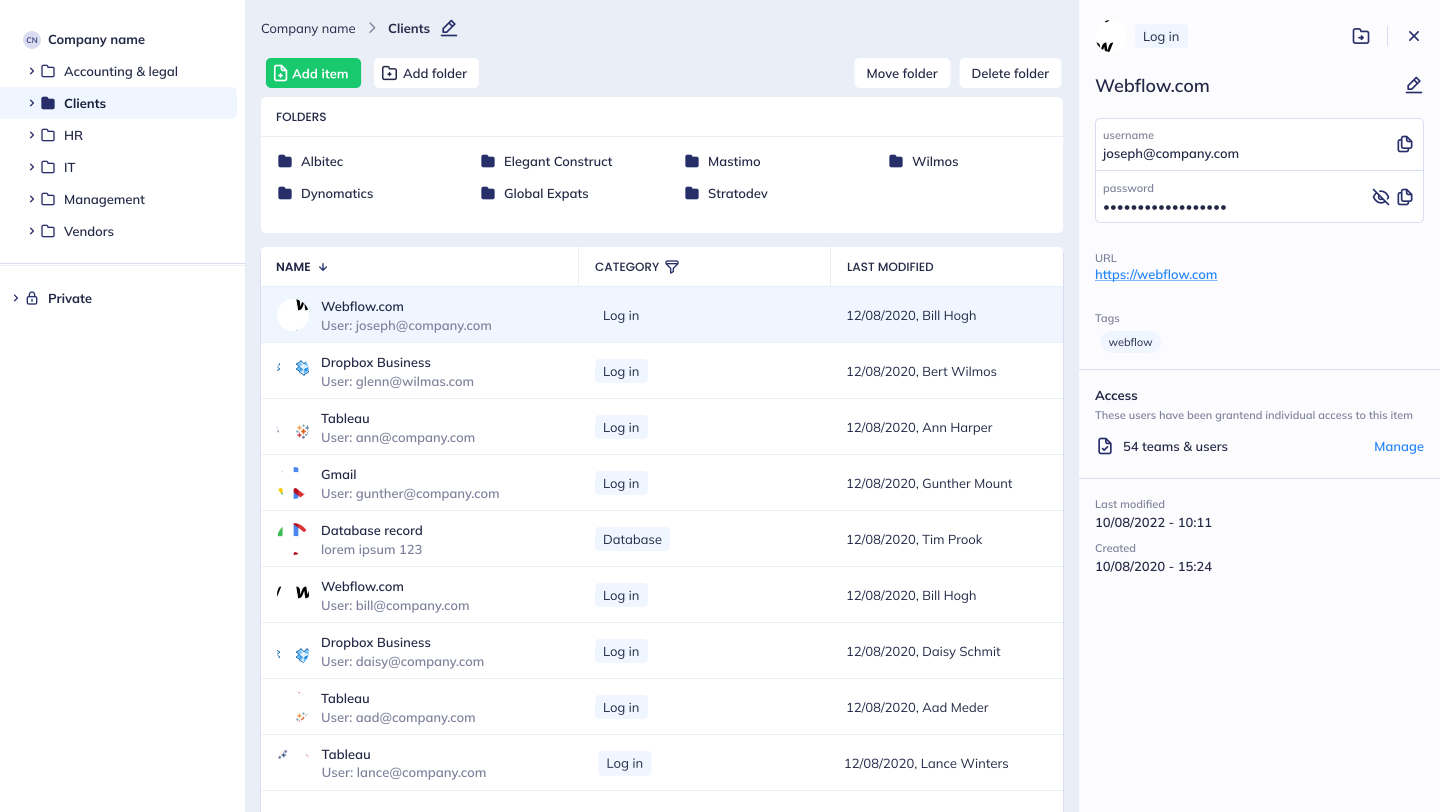
NIS2 emphasizes the need for security measures. Password managers and digital vaults are key tools for basic security. They automatically generate complex, unique passwords for each account or service, which significantly reduces the risk of brute force attacks or unauthorized access. Additionally, password managers can securely store these passwords in encrypted vaults, making them accessible only to authorized users. This ensures that even if one account is compromised, it doesn't lead to a broader breach.
By integrating a password manager in a cybersecurity strategy, organizations can comply with NIS2's requirements for enhanced security, demonstrating a proactive approach to store and protect sensitive information and critical infrastructure.
Risk Management:
Risk management is a cornerstone of the NIS2 Directive, which requires organizations to identify, assess, and mitigate risks associated with their information systems. Password managers contribute significantly to this process by reducing the risk of password-related vulnerabilities.
In the absence of a password manager, users may rely on easily memorable passwords, which are often weak, or they may reuse passwords across multiple platforms. This practice is risky because it creates a single point of failure; if one password is compromised, it can lead to breaches across multiple systems. Password managers mitigate this risk by ensuring that each password is unique and strong, significantly reducing the likelihood of successful cyberattacks. Furthermore, password managers often include features like password health checks, which alert users to weak or reused passwords, enabling organizations to take corrective actions before an incident occurs.
By incorporating password managers into their risk management strategies, organizations can better align with NIS2’s stringent requirements for proactive and effective risk mitigation.
Incident Response:
The NIS2 Directive emphasizes the importance of rapid and effective incident response to mitigate the impact of cybersecurity incidents. Password managers play a critical role in this area by facilitating quick action to secure compromised accounts.
In the event of a breach, organizations need to act swiftly to prevent further damage. A password manager allows for the immediate identification and changing of compromised passwords across all affected accounts, minimizing the window of opportunity for attackers. Moreover, many password managers offer integration with other security tools and platforms, enabling automated responses, such as forced password resets or temporary account lockouts. This automation is crucial during a security incident, as it ensures that all necessary actions are taken promptly, reducing the burden on IT and security teams.
Additionally, the ability to generate detailed logs and reports from password managers aids in post-incident analysis, helping organizations understand the attack vector and improve future defenses, in full compliance with NIS2’s requirements for incident response and recovery.
Compliance and Reporting:
Compliance with the NIS2 Directive involves not only implementing strong cybersecurity measures but also maintaining comprehensive documentation and reporting capabilities. Password managers can assist organizations in meeting these compliance requirements by providing detailed audit trails of password usage and changes.
These audit trails can be crucial during cybersecurity audits, as they offer insights into who accessed what, when, and with which credentials. Furthermore, password managers often include features that allow organizations to enforce password policies, such as requiring regular password changes or enforcing the use of multi-factor authentication (MFA). This helps ensure that password practices within the organization meet the strict standards set by NIS2.
When a cybersecurity incident occurs, password managers can provide the necessary documentation to demonstrate compliance with the directive’s incident reporting requirements. This is particularly important given the NIS2 Directive’s emphasis on timely and accurate reporting to relevant authorities, as well as its provisions for significant penalties in cases of non-compliance. Leverage the features of password managers, so your organization can more easily adhere to these regulatory requirements and avoid the legal and financial setbacks of non-compliance.